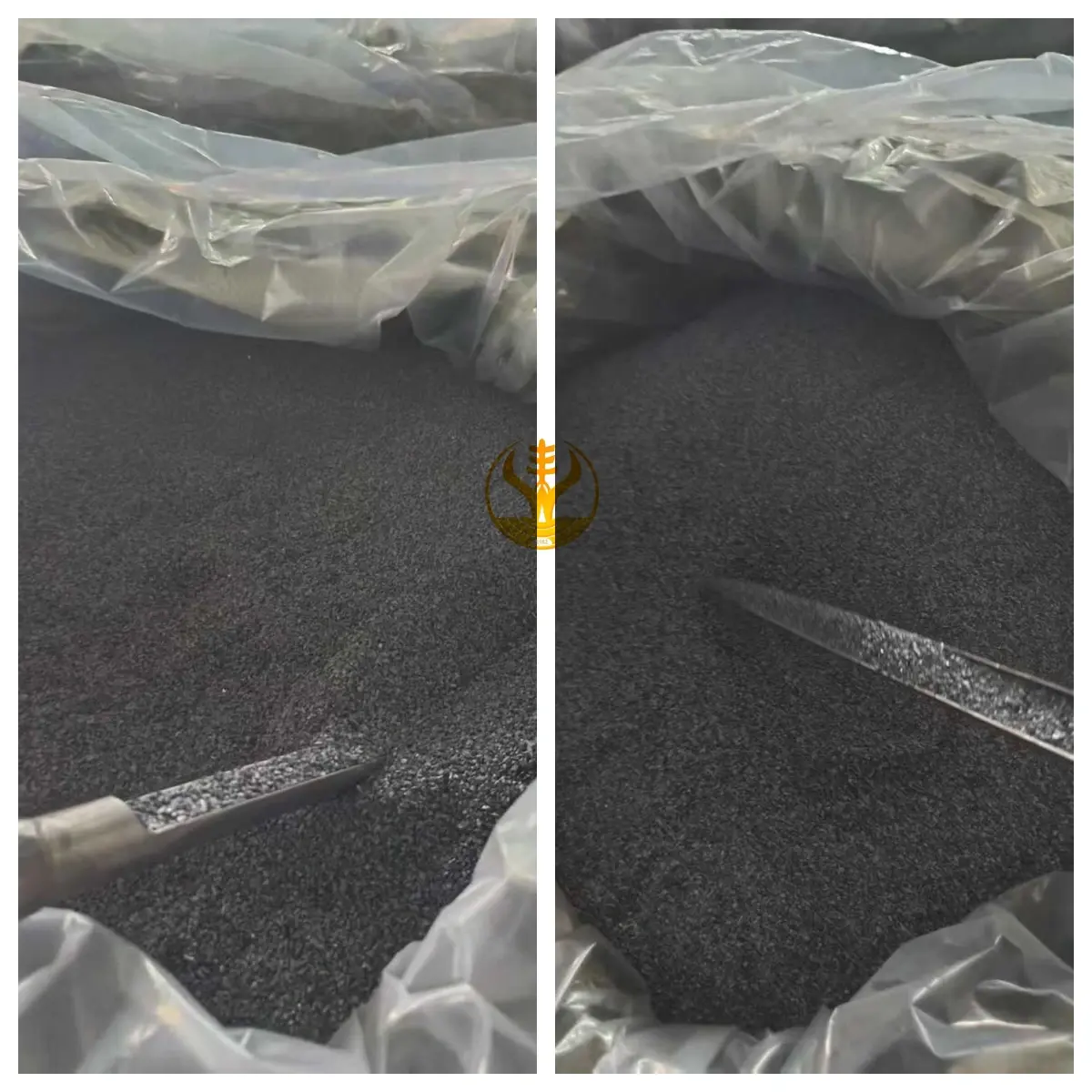
Ferrosilicon powder
2025-09-15
Ferrosilicon powder is one of the most widely used deoxidation and reduction auxiliary materials in the pre-heating phase of electric arc furnace steelmaking. With its strong reducing properties, adaptable reaction characteristics, and high cost-effectiveness, it directly participates in the deep deoxidation and oxide reduction processes of molten steel. It is a key material for ensuring pre-heating steel quality and stabilizing subsequent smelting processes. The following analysis focuses on three aspects: pre-heating application scenarios, core mechanisms, and key operational considerations.
1. Pre-heating of Electric Arc Furnaces: Core Application Scenarios of Ferrosilicon Powder
The pre-heating phase of electric arc furnace steelmaking specifically refers to the critical operational stage after the molten steel completes the oxidation phase (decarburization, heating, and dephosphorization) and before entering the reduction phase. Although the molten steel has completed initial smelting, it still contains 0.02%-0.05% dissolved oxygen and contains low-valent oxide inclusions such as FeO and MnO. Pre-heating pretreatment is required to rapidly reduce the oxygen content and impurities, laying the foundation for subsequent alloying and tapping. Ferrosilicon powder, due to its fast reaction speed and stable deoxidation effect, is the preferred material for pre-heating deoxidation and reduction. It is primarily used for pre-heating treatment of standard steel, low-alloy steel, and some specialty steels. It is particularly suitable for production scenarios requiring moderate steel purity and focusing on smelting efficiency.
2. Pre-heating Deoxidation and Reduction: The Core Function and Mechanism of Ferrosilicon Powder
In the high-temperature environment (1550-1700°C) in the front of an electric arc furnace, the silicon (Si) in ferrosilicon powder acts as a strong reducing agent, achieving deoxidation and reduction through two core reactions, directly improving the quality of the molten steel.
(I) Core Function 1: Rapid and Deep Deoxidation, Removing Dissolved Oxygen in Molten Steel
Dissolved oxygen in pre-heating molten steel is a key factor in degrading the mechanical properties of steel. Oxygen reacts with elements such as Fe and Mn in the steel to form hard and brittle oxide inclusions, reducing the steel's toughness and weldability. The core function of ferrosilicon powder is to actively consume dissolved oxygen through the "silicon-oxygen reaction." The specific process is as follows:
1. Reaction Principle: Silicon rapidly reacts with dissolved oxygen ([O]) and oxygen in the form of FeO in molten steel to form a stable solid oxide, SiO₂. The reaction equation is:
[Si] + 2[O] → SiO₂ (solid)
[Si] + 2(FeO) → SiO₂ (solid) + 2[Fe]
2. Advantages at the Furnace: Compared to ferromanganese (Mn), commonly used at the furnace, silicon has a stronger deoxidizing ability (at 1600°C, its deoxidation constant is only 1/50 of that of manganese). It can quickly reduce the oxygen content of molten steel from 0.02%-0.05% to below 0.005%. Furthermore, the density of the generated SiO₂ is much lower than that of molten steel (2.65g/cm³ vs. 7.8g/cm³). It automatically floats to the surface of the molten steel, where it merges with the slag and is completely removed through skimming, preventing residual inclusions.
(II) Core Function 2: Reducing Low-Valuation Oxides and Reducing Alloying Element Loss
Alloying materials such as ferromanganese and ferrochrome are often added to the electric arc furnace (in preparation for subsequent alloying). However, residual oxygen in the molten steel oxidizes the manganese and chromium in these alloys, forming oxides such as MnO and Cr₂O₃. This not only reduces alloy yield (loss rates can reach 10%-15%) but also increases oxide inclusions.
Ferrosilicon powder can convert these low-valuation oxides back into metallic elements through a reduction reaction and return them to the molten steel. Typical reactions include:
[Si] + 2(MnO) → SiO₂ + 2[Mn]
3[Si] + 2(Cr₂O₃) → 3SiO₂ + 4[Cr]
This process not only reduces alloying material waste (lowering furnace costs) but also further removes oxide impurities from the molten steel, improving its purity.
3. Key Points for Pre-Furnace Application: Ensuring the Efficient Function of Ferrosilicon Powder
The effectiveness of ferrosilicon powder in the pre-furnace of an electric arc furnace is directly related to the timing of addition, dosage control, and coordinated operation. The key points are as follows:
(I) Timing of Addition: It must be added after the oxidation period has ended and the slag has been removed. If added too early (before the oxidation period has ended), the silicon will be directly oxidized by the blown-in oxygen, resulting in wasteful SiO₂. If added too late (close to tapping), the reaction time is insufficient, resulting in incomplete deoxidation and reduction.
(II) Dosage Control: The dosage should be calculated based on the initial oxygen content of the molten steel. Typically, 3-8 kg of ferrosilicon powder (75% Si content) is added per ton of steel. If the oxygen content of the molten steel is high (e.g., >0.04%), the dosage can be increased appropriately, but excessive dosage should be avoided. Excessive silicon content will cause the silicon content in the molten steel to exceed the specified limit, affecting the steel's composition.
(III) Operational Coordination: After adding ferrosilicon powder, the molten steel must be agitated using argon blowing or a mechanical stirring device at the bottom of the electric arc furnace to ensure full contact between the ferrosilicon powder and the molten steel and avoid incomplete local reactions. The stirring time is typically 3-5 minutes. Once a uniform SiO₂ slag appears on the slag surface, slag removal and subsequent operations can begin.
Conclusion
In the EAF preheating process, ferrosilicon powder, through its dual functions of "deep deoxidation + oxide reduction," directly addresses the core issues of high oxygen content and high alloy loss in the molten steel. It also meets the requirements of rapid preheating, balancing efficiency and cost. The key to its effectiveness lies in precise control of its addition timing and dosage, making it an indispensable core auxiliary material in EAF preheating operations.